Integrating spheres
Integrating spheres are used together with a spectroradiometer to measure luminous flux and integrated colorimetric coordinates.
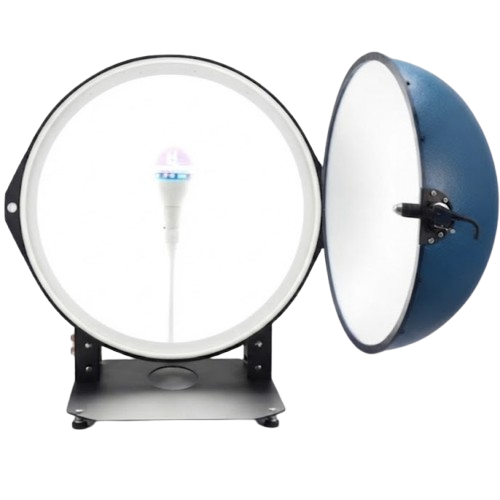
Standard solutions
Measurement systems for LEDs, lamps and luminaires based on spheres from 15 cm to 3.0 meters with 2π or 4π geometry. Ready-made solutions for laboratories, production facilities, R&D departments.
Learn more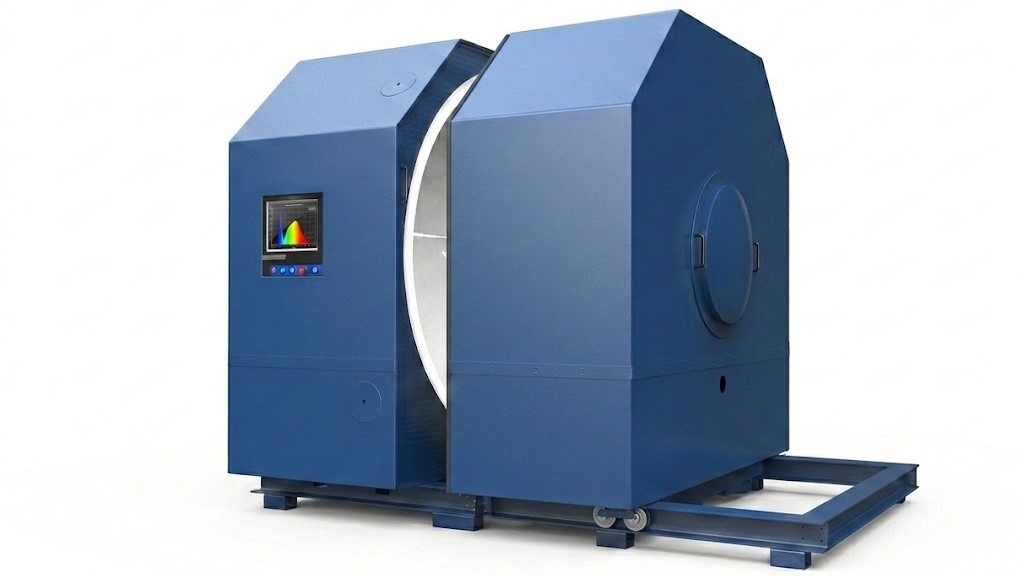
Thermostated sphere
Allows measurements of high-power sources at a constant air temperature of 25°C inside the sphere, corresponding to the standard test temperature according to IEC standards.
Learn more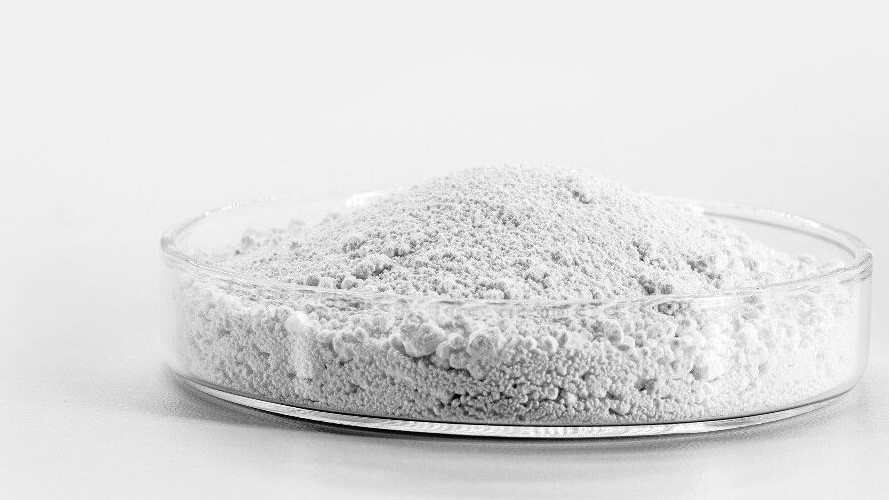
Barium sulfate (BaSO4)
Barium sulfate, also known as optical grade sulfate (BaSO4). The classic material for restoring the reflective properties of integrating spheres.
Learn moreWhat is an integrating sphere?
An integrating sphere or spherical photometer is an optical instrument that allows the determination of luminous flux in a single measurement (unlike a goniophotometer, which requires measuring a photometric body at various angles across multiple planes).
The integrating sphere consists of a hollow sphere, the inner surface of which is coated with a non-selective matte finish with a high reflectance, creating diffuse reflection. The illuminance of any point on the sphere that is shielded from the direct rays of the light source under study is proportional to the luminous flux of this source (or, more generally, to the radiant flux).
One of the key parameters of the sphere is its diameter, which must significantly exceed the dimensions of the light sources being measured; consequently, spheres with diameters of up to 16 ft (5 meters) are constructed for measuring luminous fluxes. Sometimes, the radiation under study is introduced into the sphere through an aperture that is small compared to its diameter.
Historical background
- — W.E. Sumpner (UK) provides the theoretical basis for the spherical photometer.
- — R. Ulbricht (Germany) creates the first functional integrating sphere.
- — A.H. Taylor (NBS) develops methods for measuring reflectance using integrating spheres.
- — A.C. Hardy (MIT) creates the first integrating sphere for a commercial spectrometer.
- — F. Grum and G.W. Luckey (Kodak) develop a barium sulfate-based coating.
- — D.J. Lovell (Labsphere) systematizes the principles of integrating sphere design.